
Overview Projects Stack Contact Top ⤒

Overview

Open Substation is a community-driven initiative to provide a full open-source software stack for Digital Substations. It is currently based on a handful of initial projects with the aim to grow over time via new individual contributors and organisations.

Electrical equipment vendors all have access to labs and can deploy production-grade virtual IEDs. However, these are typically proprietary and as such it’s difficult for the general public to get started using solely open-source components: academics, startups, enthusiasts… Providing alternatives to fill the gaps in the stack and facilitate development is what Open Substation is all about.

If you would like to take part or get in touch for any reason, please contact us via the Matrix chat or join the mailing list.

Projects

The Open Substation community initiaive was bootstrapped thanks to the following projects:

SEAPATH

SEAPATH is a well established Linux Foundation Energy project. It provides the backbone of a Digital Substation software architecture with a hypervisor, web dashboard and Ansible configuration for real-world production deployments.

OpenEnergyTools

With its related OpenEnergyStack set of Rust crates, these tools include implementations of key parts of the IEC61850 standard for exchanging GOOSE and Sampled Values messages. They are the building bricks for applications found in Digital Substations such as protection functions.

Open Substation Devkit

To bundle all the software into a development-friendly setup, the Devkit makes it possible to run a virtual SEAPATH hypervisor with nested VMs on a standalone computer. While it’s not exactly the same as a hardware deployment, especially with real-time and latency considerations, it makes it possible for anyone to get started and work on these projects with just a laptop or a workstation.

Stack

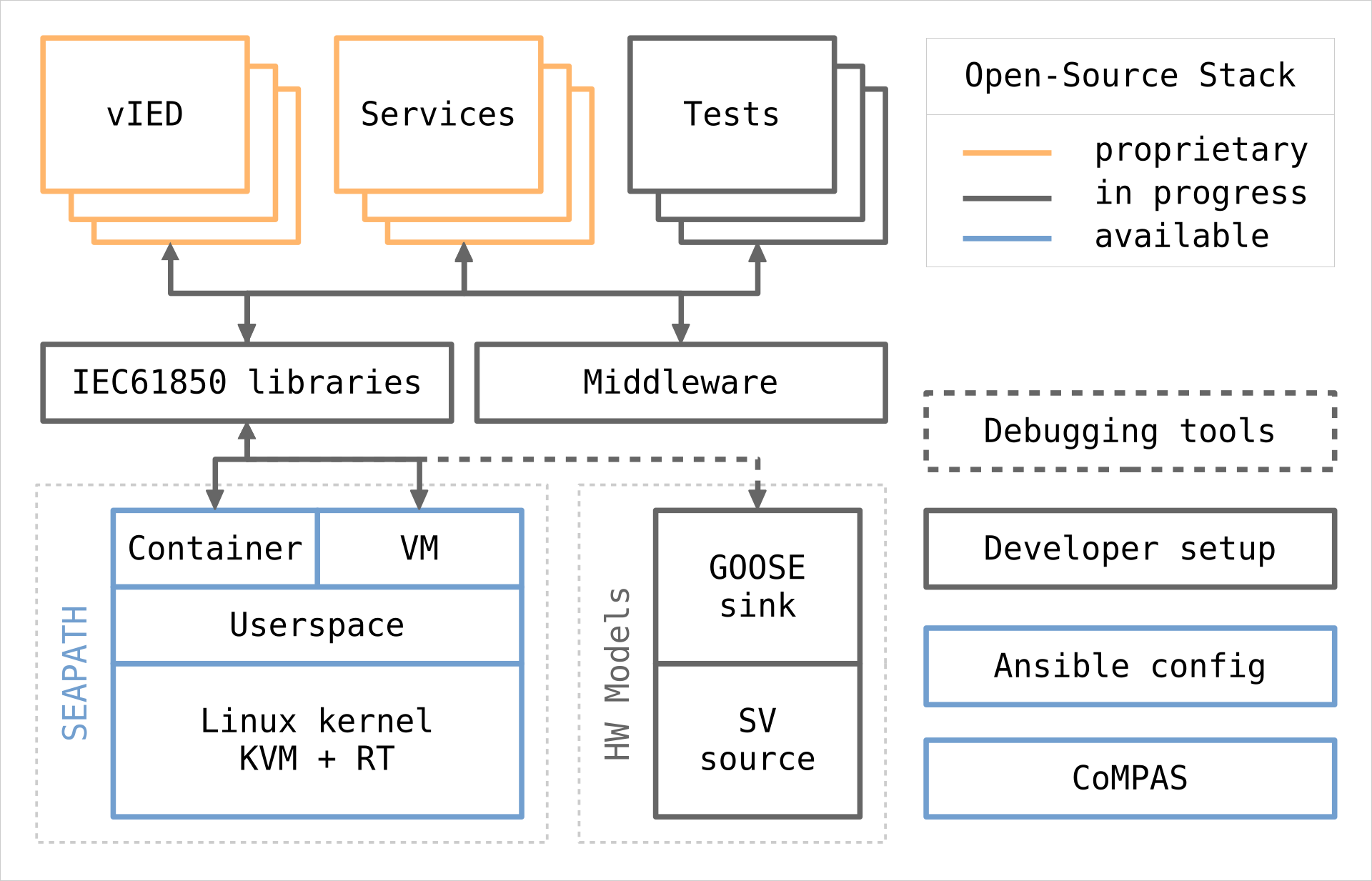
To illustrate how the different components fit together and where there are still gaps to be filled, here’s an overall stack diagram with how things currently stand:

Open Substation Stack

The proprietary applications are meant to keep existing as the stack should form a basis for a variety of use cases, including production deployments. The goal there is to have reference open-source applications with a common set of middleware and IEC61850 libraries.